Clinical content velocity
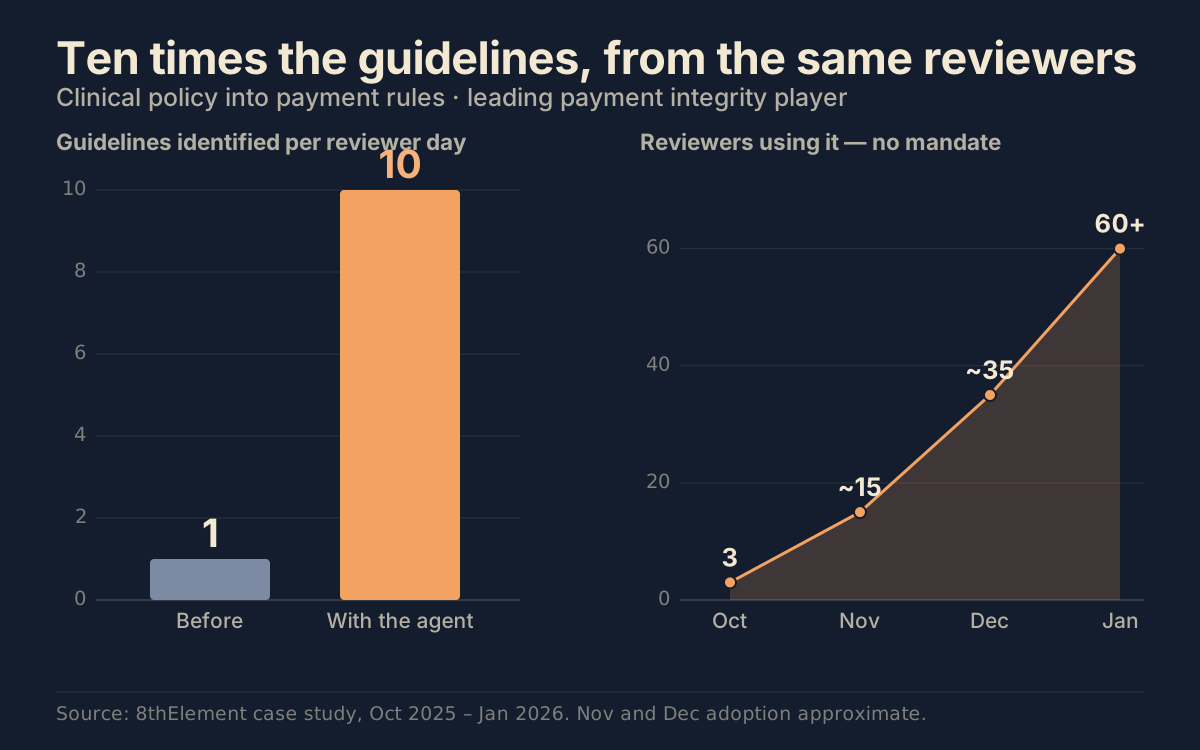
The clinical content team at a leading payment integrity company was producing one guideline per reviewer per day. We built agents that changed that to ten, without replacing a single reviewer.
Leading payment integrity player · 12 weeks
The content that powers accurate claims decisions took too long to produce.
At the core of payment integrity is clinical content: the policies, guidelines and rules that determine whether a claim is paid, denied or reviewed. Creating it was entirely manual — a clinician took a policy document of several hundred pages, read it, identified language that could become a denial criterion, and drafted a guideline. One person, one document, one day.
Two steps out of five consumed the whole day.
Identifying denial language and drafting the guideline both need deep reading, pattern recognition across large bodies of text, and consistent extraction of structured meaning from unstructured clinical language. Exactly what agents are good at.
An agent that does the reading. A human who does the judging.
The Clinical Policy Reader identifies passages matching the language patterns used to define clinical rules and presents ranked candidates with their source. The reviewer's task changed from reading documents to reviewing suggestions. We deployed the first version in 12 weeks using a pod of four engineers and Voyager build agents, starting in shadow mode with humans making every call.
Three people in October. More than sixty by January.
Adoption spread because the work got easier, not because anyone was told to use it. Reviewers who had spent years reading dense policy documents were doing something different and better. Output went up, frustration went down, and colleagues told colleagues.
Four things worth carrying forward.
Change the task, not just the tool
Reviewers went from reading to reviewing — a more valuable use of clinical expertise. Adoption took care of itself.
Autonomy has to be earned
Shadow mode gave reviewers time to build confidence before autonomy expanded. In a regulated clinical setting that is not optional.
Thoroughness is the superpower
The gain was not reading speed. A person under time pressure skims; an agent surfaces every relevant passage, every time.
The best adoption strategy is a tool that works
We spent very little on formal change management.