BFSI. High volume, high stakes, every decision explainable.
Our leadership has run operations and technology at global asset managers, industrial groups and business-process firms. We build agents for work that is mostly reading, matching and assembling — and keep the decision with a licensed, accountable person.
Workflows we take to production.
Indirect procurement
One standard for every request; clear cases processed, edge cases escalated with a recommendation.
Read the use case →KYC and periodic review
Documents, registry data and screening assembled; change since last review summarised for analyst sign-off.
Claims
Intake extracted, coverage matched, fraud patterns flagged with evidence. Adjusters decide.
Underwriting
Submissions and financials read into a structured file summary with guideline exceptions highlighted.
Finance operations
Reconciliations, close tasks and variance explanations drafted from ledger and sub-ledger data.
Complaints & conduct
Complaints clustered by root cause, regulatory deadlines tracked, responses drafted for review.
Built inside your compliance boundary.
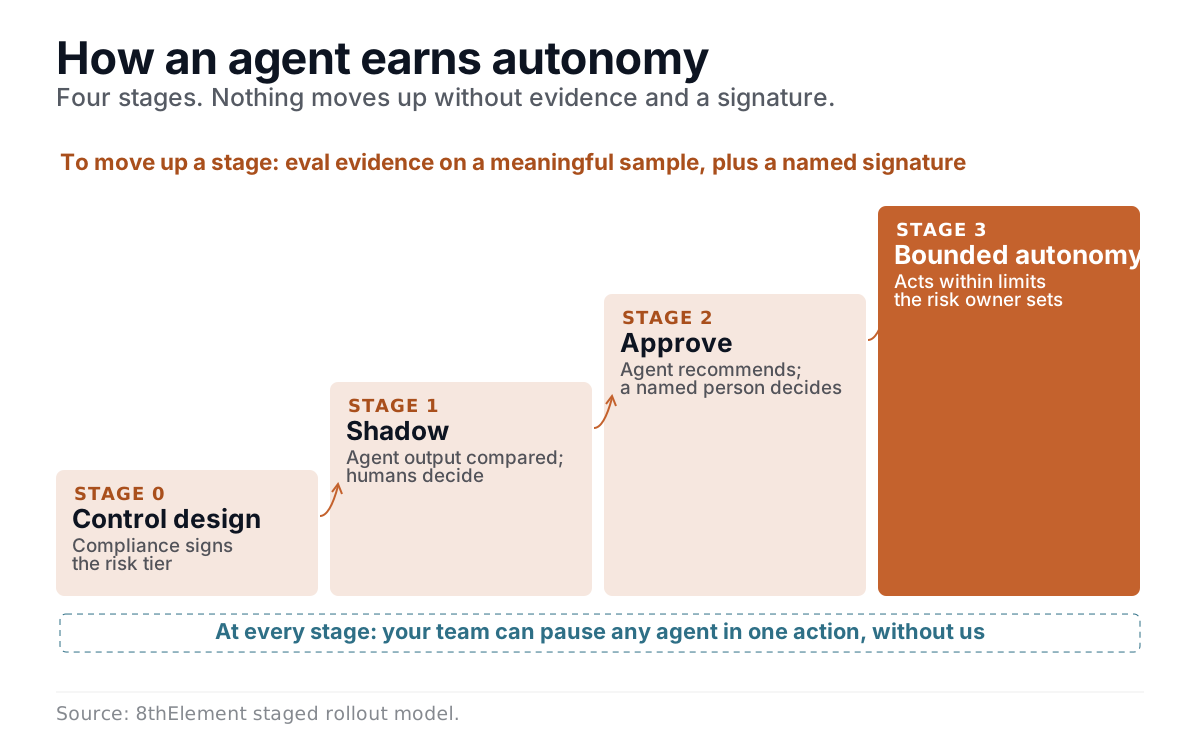
Every agent ships with a model card, validation evidence, drift monitoring and a human-in-the-loop design your model risk function can review. Fair lending and fairness metrics are monitored on anything touching customers. Argos pins regulated use cases to approved models and regions.
What this looks like on a Tuesday.
The standard lives in the overrides
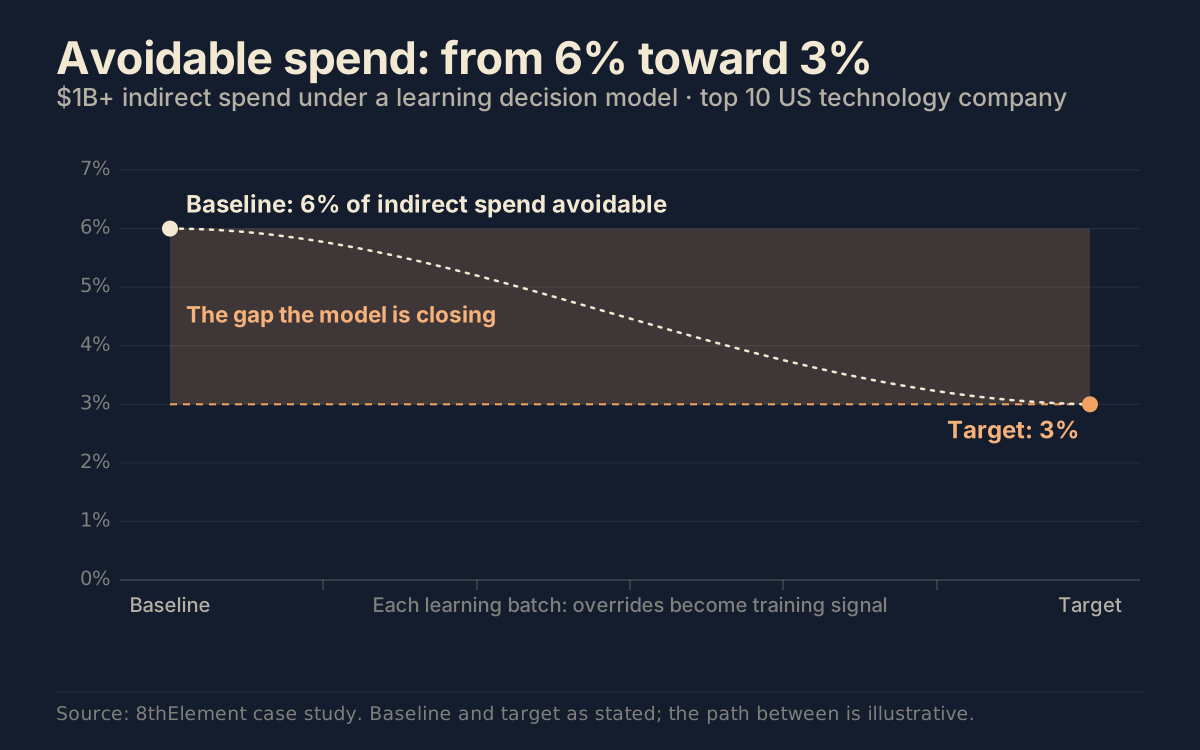
In procurement, requests arrive against contracts held in different systems, and category managers apply the written policy differently. The real standard is visible in the overrides: which requests get waved through, which get challenged, and why. We put one decision model in front of every request, then treat each override as a labelled example that retrains it. The model proposes; the category manager decides and keeps the audit trail.
Periodic review is retrieval before it is judgement
A KYC refresh is mostly assembly: pull the current ownership structure, screen for adverse media and sanctions, reconcile what changed since the last review, and set out the exceptions. That assembly is where analyst hours go, and it is what an agent does well. The risk rating stays with the analyst, and the pack shows every source it used, so a reviewer can follow the same path.
Model risk documentation is part of the build, not a later phase
Supervised institutions are expected to document model purpose, data, limitations and monitoring, and to validate independently of the people who built it. We write model cards, validation evidence and monitoring plans as the work proceeds, because a model that cannot be explained to a validator will not reach production however well it scores.
The failures we see most.
A model the validator cannot follow
Accuracy is not the blocker. Documentation, lineage and monitoring are, and they are hardest to add afterwards.
Category codes that vendors game
Spend models built on codes alone find savings that procurement cannot realise, because the codes describe the invoice rather than the purchase.
Automation that breaks the trail
If the reviewer cannot reproduce how a pack was assembled, the efficiency gain is undone at the first audit.
Six that go in first.
What we can deploy depends on your systems and data. An operator confirms the shortlist before an engagement starts.