One standard on every purchase request — and it gets sharper each batch.
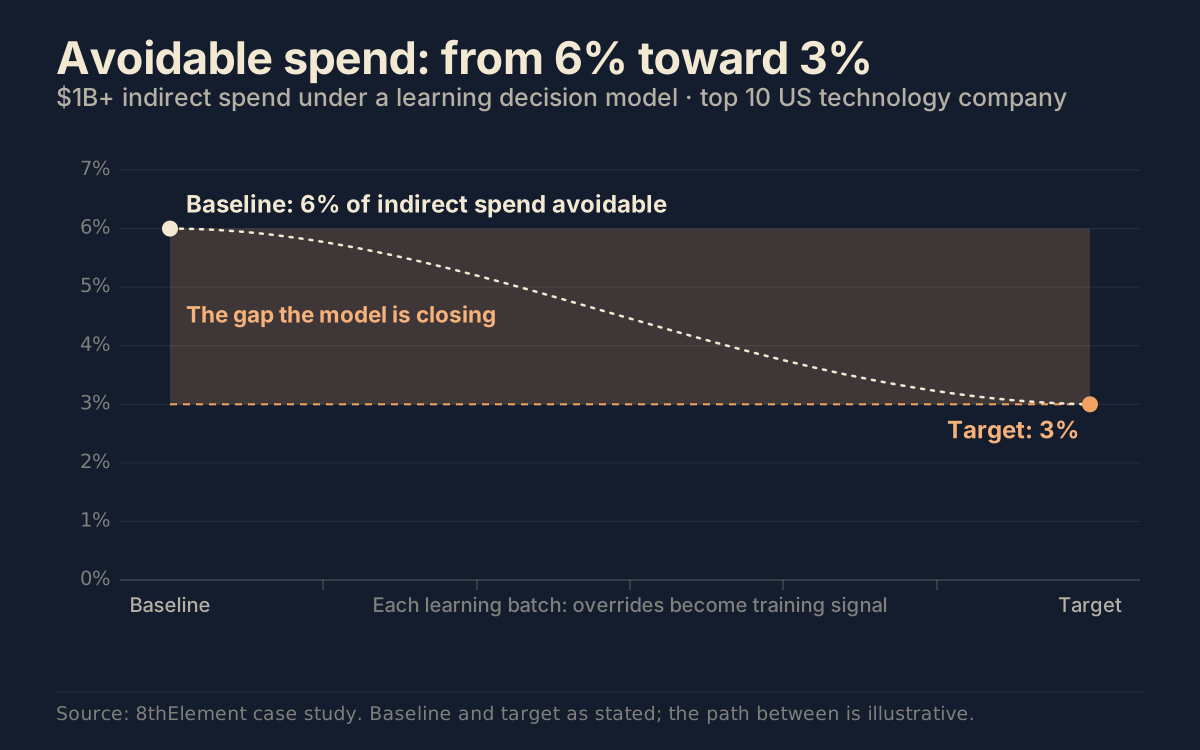
Indirect procurement is high volume, hard to control, and reviewed by people applying slightly different standards on different days. Around 6% of it is avoidable. Closing that by hand at a billion dollars of spend is not realistic.
Why this queue costs what it costs.
Inconsistency is the real cost
Different reviewers, different parts of the organisation, different criteria — and nothing learning from decisions already made. Off-policy purchases, duplicates of existing contracts and poorly negotiated terms all slip through.
The target was 3%. The gap was manual.
Reviewing a billion dollars of requests consistently, without fatigue, is not something a team can do by reading.
What the agent does, and where the human stays.
Review against everything at once
Each request checked against policy, past decisions, existing contracts and category benchmarks.
Accept or escalate
Clear cases processed automatically within thresholds. Edge cases go to a buyer with a recommendation and the reasoning behind it.
Capture every decision
Each confirmation or override becomes a training signal.
Expand autonomy on evidence
As measured accuracy improves, procurement leadership raises the thresholds. The system running today handles more alone than the one deployed on day one.
The constraints that make it deployable.
These are not aspirations. They are enforced in the build, checked by the eval suite and visible in the audit trail.
| 01 | Autonomy thresholds set by category and value by procurement leadership, not by us. |
| 02 | Every override captured, analysed and reported weekly for drift and fairness. |
| 03 | No supplier is contacted by an agent; negotiations stay human. |
| 04 | Model risk documentation (SR 11-7) ships with the build. |
| 05 | Full decision trail per request for internal audit. |
What the sponsor sees every month.
The baseline is agreed with Finance before we start. These are the lines on the console — and what our outcome fee is read from.
Avoidable spend as % of total
Share of requests decided autonomously
Cycle time per request
Savings identified and realised
Override rate trend
12 weeks to first production outcome
Blueprint and eval scaffolding by week 2, shadow mode by week 8, approve mode with a measured result by week 12 — then autonomy expands on evidence.
How AIM sequences it →