Retail. Pricing, forecasting and spend decisions built on current data.
Margins are thin and the data is enormous. We put agents on the work that waits for reports — pricing, shrink, forecasting, sourcing — and keep merchants and planners in charge of the calls that matter.
Workflows we take to production.
Pricing and markdown
Price and markdown proposals from sell-through, inventory and competitor signals, with expected margin impact.
Demand forecasting
SKU and location forecasts with a plain language explanation of what moved and where the model is unsure.
Shrink and loss prevention
Loss patterns across POS, inventory and returns surfaced with an evidence pack. Patterns, never people.
Spend intelligence
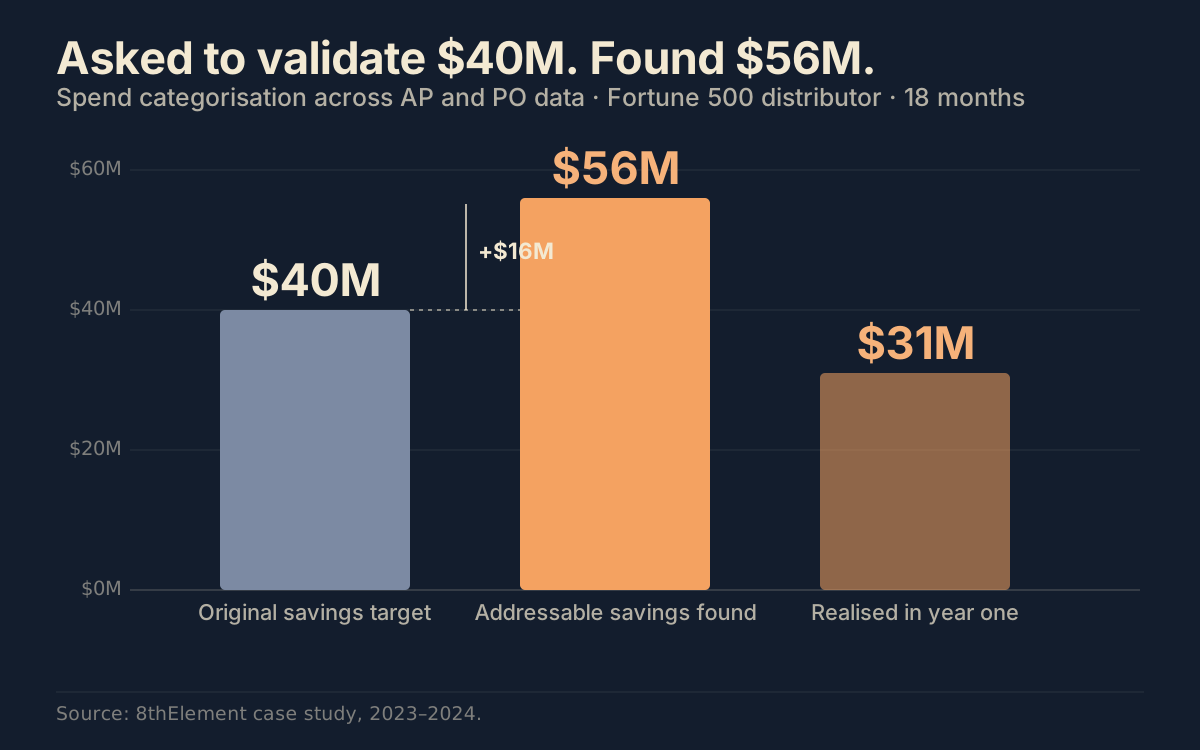
Vendor normalisation and category classification that finds savings manual review misses.
Read the use case →Supplier negotiation prep
Cost trends, alternatives, contract terms and a recommended ask, assembled before the meeting.
Workforce scheduling
Demand-driven schedules with labour rules enforced in code; managers adjust.
Built inside your compliance boundary.
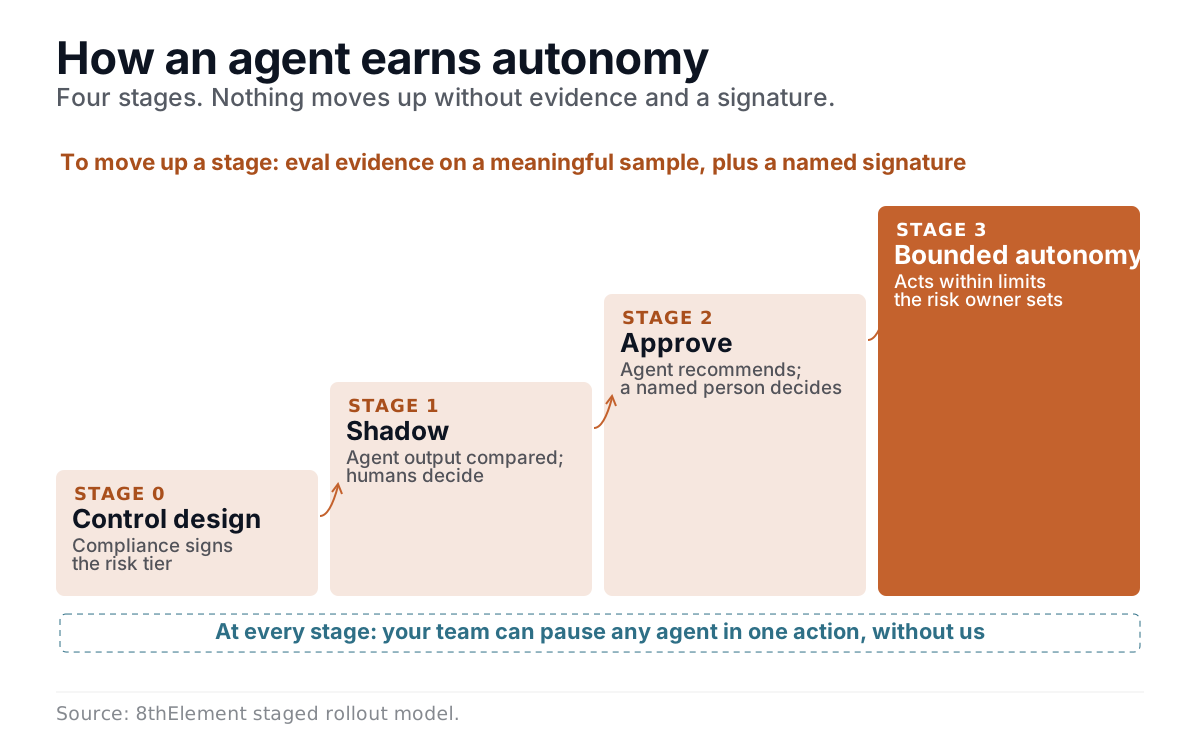
Hard price floors and legal constraints are enforced in code, not in prompts. No personalised pricing. Loss-prevention agents report patterns and never generate accusations about individuals.
What this looks like on a Tuesday.
Nothing works until the vendor and item master do
The same supplier appears forty times across the ERP, the procurement system and three regional spreadsheets. Spend categorisation, negotiation leverage and forecast accuracy all sit downstream of that. We resolve vendors and items to one record with survivorship rules a data steward approves, and we reconcile the result to the general ledger, because a saving that finance cannot see in the GL is not a saving.
Pricing runs on a calendar, not on a model's schedule
Markdowns and promotions move on a weekly cadence set by merchandising, inside floors the business sets and competitor moves nobody controls. An agent proposes price and markdown changes with the expected margin effect and the reason; merchants approve or reject. Floors, exclusions and brand rules are enforced in code rather than in a policy document, so a model cannot price below them even when the maths says otherwise.
Forecasting is judged on exceptions, not on averages
At SKU and location level, demand is intermittent, promotions distort history and substitutions hide real signal. An improvement in average error changes nothing on its own. What changes the outcome is catching the exceptions early: the lines about to stock out, the ones where the promotion lift will not repeat, the ones where last year's data should be excluded. The forecast has to say where it is unsure and why.
The failures we see most.
Savings that will not reconcile
A number produced against a spend cube that finance cannot tie to the GL will be disputed and then dropped.
Accuracy that changes no order
If the forecast does not reach the replenishment decision, a better model is a better report and nothing else.
Promotion distorted history
Retraining on unadjusted promotional periods teaches the model that every week is a promotion week.
Six that go in first.
What we can deploy depends on your systems and data. An operator confirms the shortlist before an engagement starts.