Hybrid pods. Our operators, your experts, our agents.
Consulting tells you what to do. Services do it for you. We do both inside one accountable team — and put the fee at risk on the number the sponsor owns.
Agents take the volume. People take the judgment.
The old split — strategy firm upstairs, system integrator downstairs — is how AI programs lose a year. The people who understood the outcome are gone by the time the build starts, and the builders bill by the hour whether the number moves or not.
A hybrid pod keeps the domain operator, the architect, the engineers and the agents in one room for the whole AIM cycle.
| Work | Agent | Person |
|---|---|---|
| Discovery | Scans estate, drafts inventory, profiles data | Interviews leaders, validates ownership, decides what stops |
| Specification | Drafts blueprint, acceptance criteria, evals | Argues the spec with the sponsor, signs it |
| Build | Writes code and tests, opens PRs, explains changes | Reviews every merge, owns architecture and integration |
| Release | Runs eval gates, blocks regressions | Approves exceptions, sets risk thresholds |
| Operate | Resolves known incidents, meters cost, detects drift | Handles exceptions, runs change, signs the outcome number |
| Report | Assembles governance evidence and outcome attribution | Presents to the board, owns the regulator relationship |
Three shapes, one accountability model.
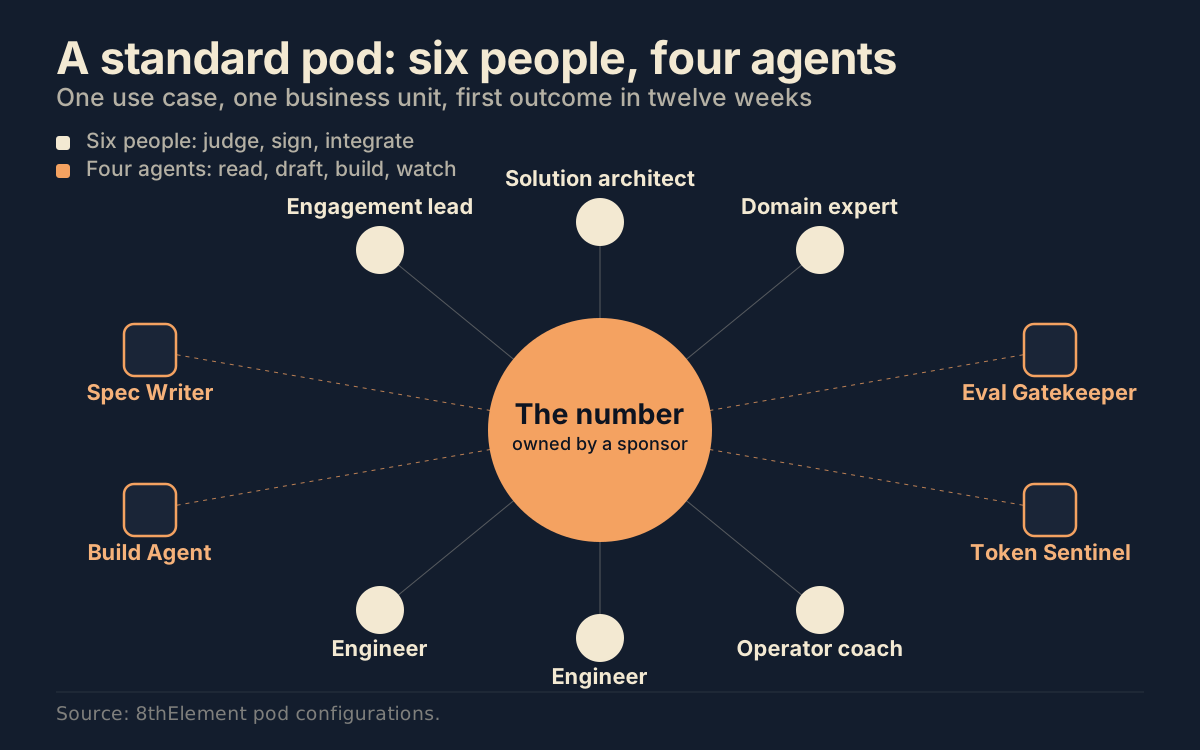
One use case, one business unit
Engagement lead, solution architect, two engineers, domain SME, HITL operator coach — plus Spec Writer, Build Agent, Eval Gatekeeper and Token Sentinel.
First outcome in 12 weeks · base plus outcome share
Two to four use cases across units
Program lead, two architects, 4–6 engineers, change lead, FinOps analyst, domain SMEs — plus the full Implement agent set, Argos routing and the Pattern Librarian.
Most of the fee tied to the outcomes the sponsor owns
Portfolio-wide
Portfolio director, architecture lead, SRE lead, governance lead, 8–14 engineers, SMEs per business unit — every agent, tiered maintenance, quarterly board reporting.
Success measures agreed with the sponsor when we scope the work
When a pod becomes an operating model.
Some engagements shouldn't end. Where a client needs sustained capability rather than a sequence of projects, the same pod structure runs as a global capability centre — offshore delivery with the domain knowledge to keep improving, measured on speed, governance, accuracy and business productivity rather than tickets closed.
In practice that means several workstreams under one accountable pod, sequenced deliberately: the data foundation before the agents that depend on it, application operations stabilised alongside, and new capability added as the pod earns the right to it.
Data foundation
Fabric and Profisee: source onboarding, match and survivorship, hierarchy management and a stewardship model the business owns.
Application operations
From escalation-driven firefighting to a library of known issues, predictable service and steady improvement.
AI agents on top
Matching, routing and operations automation, built once the record underneath them is trustworthy.
Your outcome is our income.
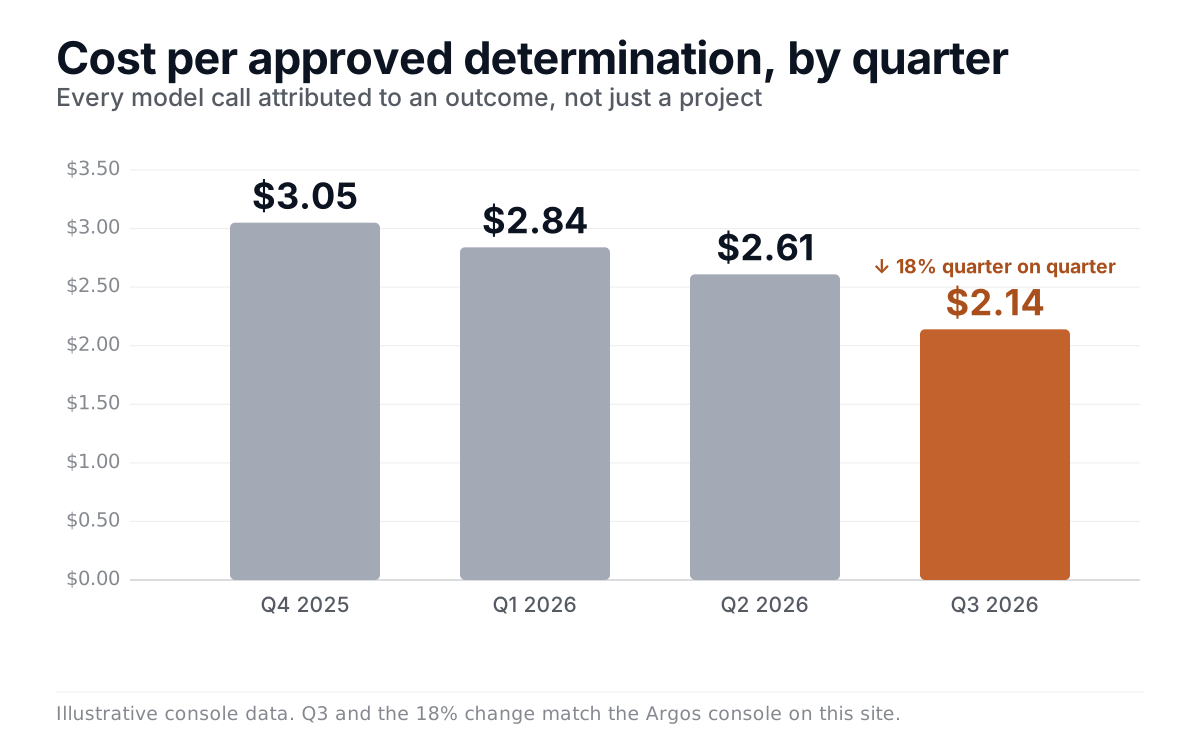
Every engagement has a number the sponsor owns and a baseline Finance accepts before we start. Our fee has a base component that covers the pod and an outcome component that pays only when the number moves and Finance agrees it moved.
Baseline agreed
The Spend Archaeologist and Outcome Attribution Agent set the baseline during Assess. Finance signs it.
Measured in the open
Outcome, adoption and cost per outcome on the console. No end-of-project surprise.
Handoff built in
We train your team, document what matters and step back. How fast that happens is one of our own metrics.