A customer golden record your business will actually trust.
Master data is where most AI programmes quietly fail. If the customer record is duplicated, conflicting or unowned, every agent downstream inherits the mess. We build the governed foundation first — on Microsoft Fabric and Profisee — and put agents on the matching work while stewards keep the decisions.
Why this queue costs what it costs.
The same customer, six times over
Customers arrive through different systems, regions and acquisitions, each with its own spelling, hierarchy and identifiers. Reporting disagrees with itself, onboarding repeats work already done, and nobody can say which record is authoritative.
Stewardship doesn't scale by hiring
Manual matching and survivorship is slow, inconsistent between stewards, and unbounded — the exception queue grows faster than the team clearing it. Meanwhile the business waits on onboarding.
What the agent does, and where the human stays.
Build the governed foundation
Microsoft Fabric for the data engineering layer and Profisee for MDM: source onboarding, match rules, survivorship policy, hierarchy management and the stewardship workflow, designed with your data owners rather than handed to them.
Score quality at the door
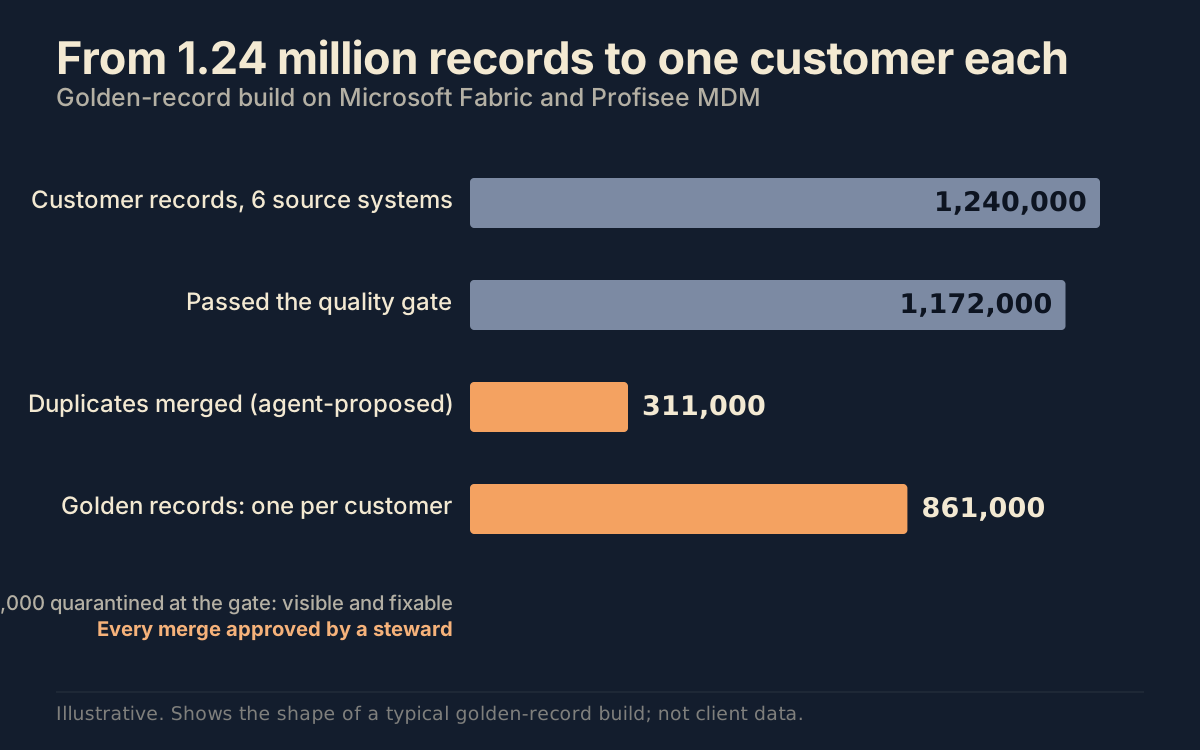
The Data Quality Sentinel profiles every incoming feed against the domain's rules and quarantines records that would pollute the golden record — with the quality score published per source, so accountability sits with the owner.
Let agents propose, stewards dispose
The Customer Match & Survivorship Agent resolves duplicates and proposes the surviving record field by field, showing which source won and why. Stewards approve, edit or reject; nothing merges silently.
Run the queue, don't drown in it
The Stewardship Copilot prioritises exceptions by business impact, drafts the recommended resolution and escalates policy exceptions to the named data owner.
Then build on top
Once the golden record is trustworthy, customer mapping, onboarding automation and downstream AI agents become straightforward. Before that, they are a liability.
The constraints that make it deployable.
These are not aspirations. They are enforced in the build, checked by the eval suite and visible in the audit trail.
| 01 | No merge above the confidence threshold without a steward's approval; every merge reversible and logged. |
| 02 | Every surviving field shows its source and the survivorship rule that selected it. |
| 03 | Quarantine rather than silent deletion — rejected records are visible and remediable. |
| 04 | Rule and policy changes require data-owner approval, versioned with change history. |
| 05 | Data quality scores published per source system so accountability sits with the owner, not the steward. |
What the sponsor sees every month.
The baseline is agreed with Finance before we start. These are the lines on the console — and what our outcome fee is read from.
Duplicate rate in the golden record
Records processed per steward day
Exception backlog age
Customer onboarding cycle time
First-time pass rate by source system
12 weeks to first production outcome
Blueprint and eval scaffolding by week 2, shadow mode by week 8, approve mode with a measured result by week 12 — then autonomy expands on evidence.
How AIM sequences it →