Sustainability data with its source attached.
Reporting is a reading problem at industrial scale: thousands of disclosures in a dozen formats and languages, mapped to frameworks that keep changing, with assurance providers asking where each number came from.
Workflows we take to production.
Disclosure extraction
Reports, filings and questionnaires read into structured, evidence linked datasets. Multi-language.
Read the use case →Framework mapping
One extraction, many taxonomies: CSRD/ESRS, ISSB, GRI and GHG Protocol, through versioned and auditable rules.
Customer data foundation
Governed customer golden records on Microsoft Fabric and Profisee, so reporting and onboarding stop disagreeing with themselves.
Read the use case →Data quality at the door
Incoming feeds scored against domain rules, with quality published per source so accountability sits with its owner.
Built inside your compliance boundary.
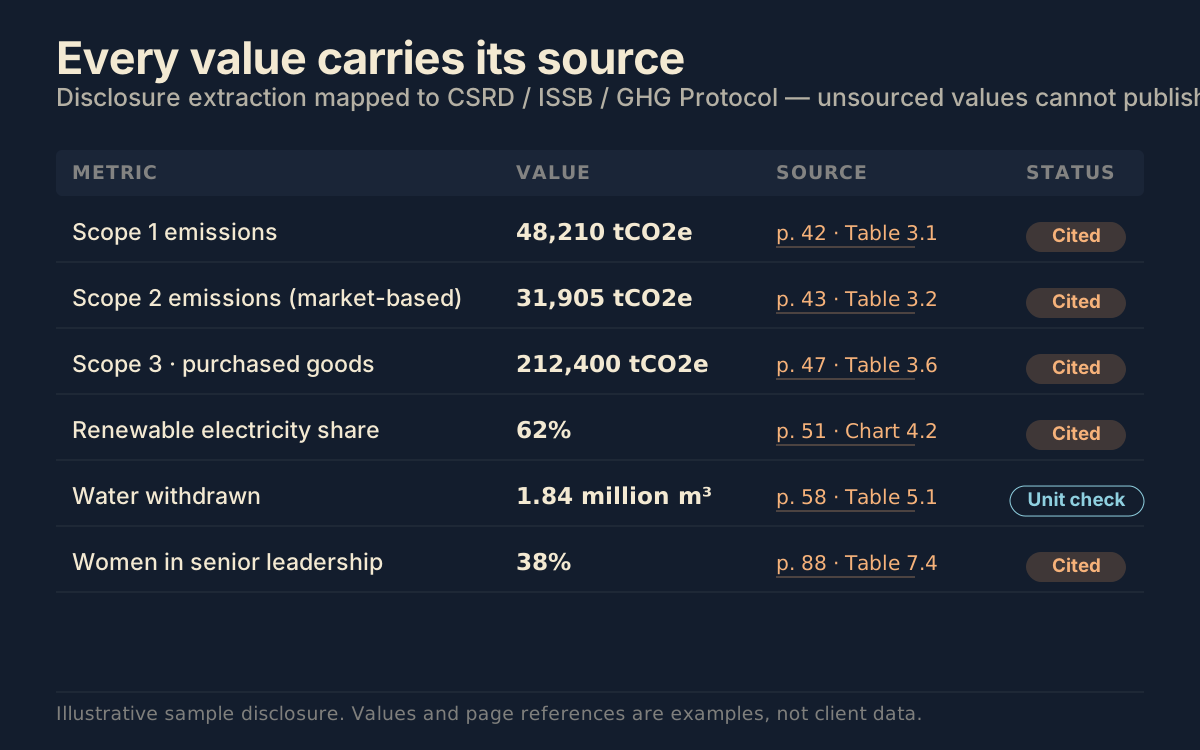
Omnibus I narrowed who has to report and cut the datapoints, but it kept double materiality and limited assurance, which tests whether you can trace a published number back to its source. Every value our agents produce carries a link to the page, table and cell it came from, the mapping rule that placed it and the analyst who approved it. Unsourced values cannot be published.
What this looks like on a Tuesday.
The reporting perimeter moved in March 2026
Omnibus I, Directive (EU) 2026/470, came into force on 18 March 2026. Mandatory CSRD reporting now applies to companies above both 1,000 employees and €450 million net turnover, which takes the population from roughly 50,000 to around 5,000. ESRS datapoints were cut by about two thirds, sector specific standards were dropped, and companies that were in wave two now report under the revised framework from financial year 2027. Double materiality survived intact. Smaller suppliers are still asked for the same data by customers, lenders and procurement teams, whatever the directive says.
Limited assurance is the standard, and it is a traceability test
The Omnibus removed the planned move to reasonable assurance. Limited assurance remains, and in practice the assurance provider tests your process and your evidence: can you show where a published number came from, who approved it, and what rule mapped it to the disclosure. That is a data lineage problem, not a reporting problem, which is why spreadsheets as the system of record fail the first review.
One extraction, many frameworks
Disclosures arrive as PDFs, supplier questionnaires and portal exports, in several languages, with the same metric labelled differently in each. We read them into structured data with the page and table recorded against every value, then map that one extraction to ESRS, ISSB and GHG Protocol through versioned rules. When a framework changes, the mapping changes, not the underlying data.
The failures we see most.
The number with no source
A figure that cannot be traced to a document and an approver will be restated after review, along with everything near it.
Questionnaires nobody answers
Supplier data collection fails on response rates, not on analysis. Chasing is the work.
Rebuilding every year
If the mapping lives in one analyst's spreadsheet, next year's framework change starts the whole exercise again.
Six that go in first.
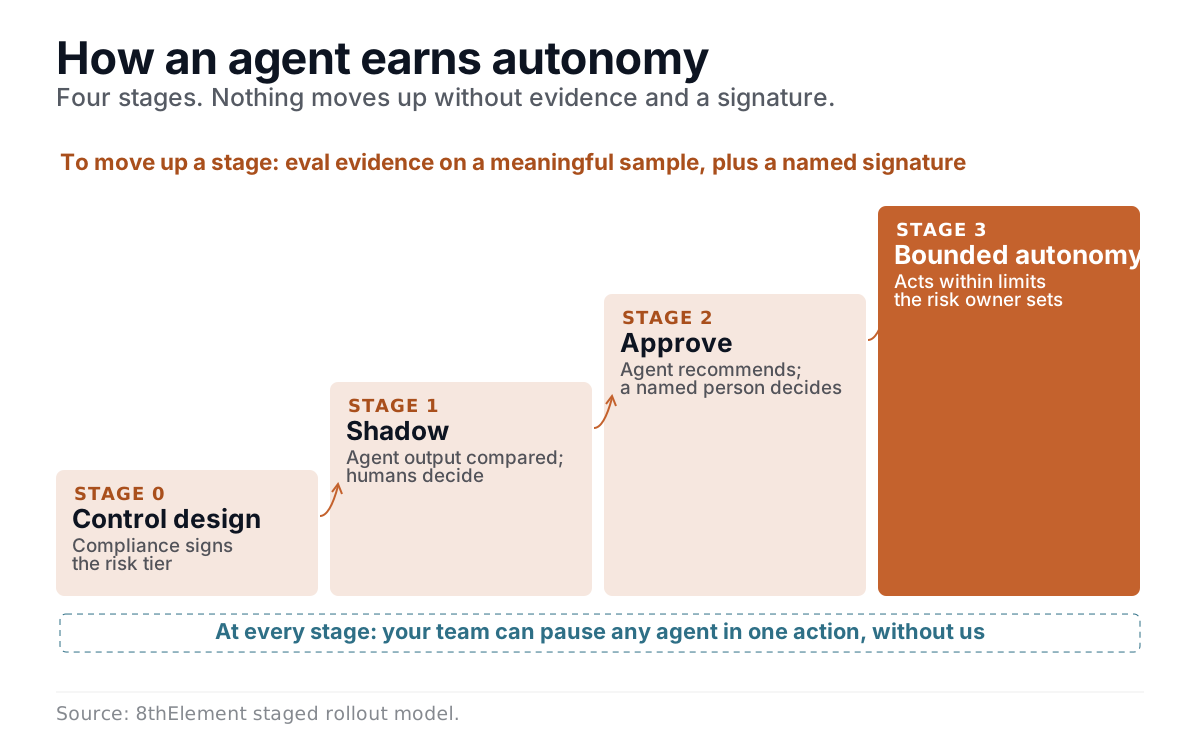
What we can deploy depends on your systems and data. An operator confirms the shortlist before an engagement starts.