Know what your AI costs, whether it's approved, and whether it's worth it.
AI spend is the fastest growing line item most enterprises can't explain. Costs are per token, prices move monthly, one prompt edit doubles spend overnight, and a sandbox can route regulated data to a model nobody approved. This is the FinOps and governance layer for all of it.
Why this queue costs what it costs.
The bill arrives after the decision
Cloud went through this a decade ago. AI is worse: consumption is per call, attribution is absent by default, and the people spending are not the people who see the invoice.
Policy without enforcement is a document
Approved model lists and data-classification policies exist in most enterprises. Without something sitting at the gateway comparing live traffic to them, they describe intentions rather than reality.
What the agent does, and where the human stays.
Meter at the gateway
Every model call metered and attributed to a project, use case, team, model and outcome. Metadata only — prompt content is never stored.
Budget and forecast
Budgets per project with soft alerts before hard caps, and a month end forecast that updates hourly. Anomaly detection runs on burn rate, not just totals.
Compare to what was approved
Live usage checked against each project's approved model card and data classification. Deviations raise a ticket with evidence; hard violations are blocked.
Route on price and parity
Requests routed to the cheapest model that still passes evals. Regulated use cases pin approved models and regions.
The constraints that make it deployable.
These are not aspirations. They are enforced in the build, checked by the eval suite and visible in the audit trail.
| 01 | Soft alerts before hard caps, so nothing breaks without warning. |
| 02 | Prompt and response content never stored — metadata only. |
| 03 | Blocks reserved for hard policy violations; everything else raises a reviewable ticket. |
| 04 | Every block logged with evidence and reviewable by the project team. |
| 05 | Finance owns budget definitions and category mappings. |
What the sponsor sees every month.
The baseline is agreed with Finance before we start. These are the lines on the console — and what our outcome fee is read from.
Budget variance by project
Anomalies caught before overrun
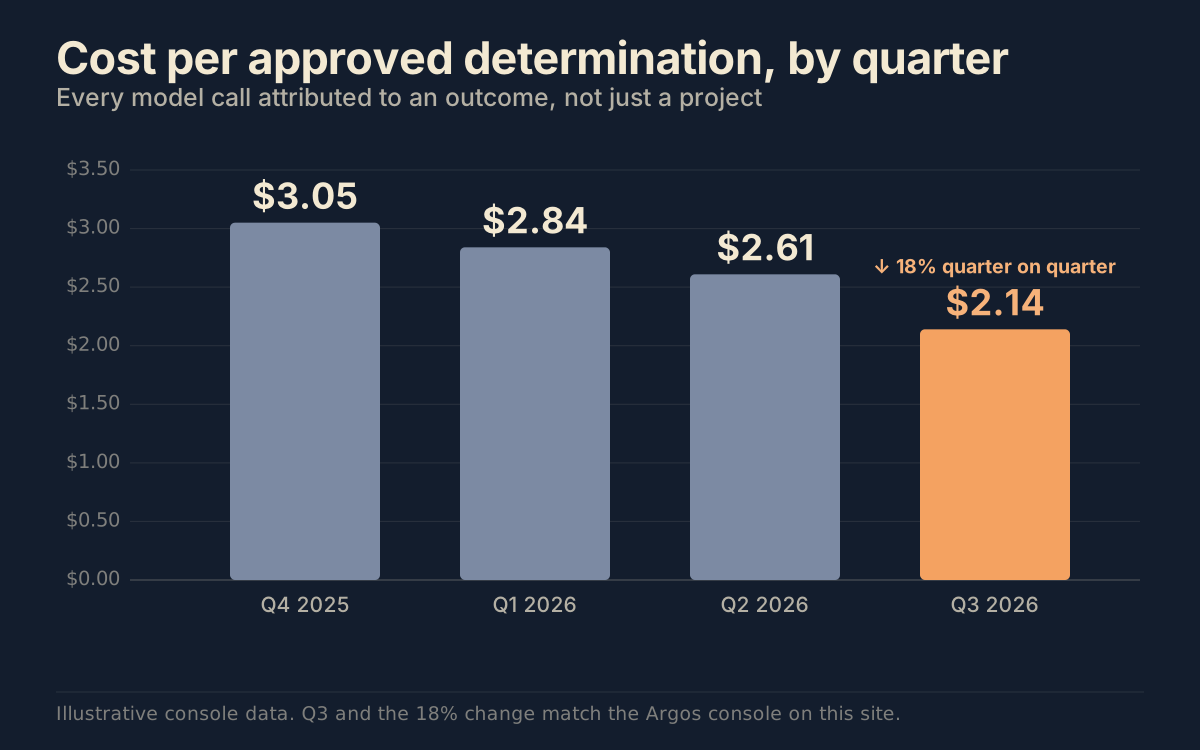
Cost per outcome trend
Routing savings vs single model baseline
Time to remediate a deviation
12 weeks to first production outcome
Blueprint and eval scaffolding by week 2, shadow mode by week 8, approve mode with a measured result by week 12 — then autonomy expands on evidence.
How AIM sequences it →