Healthcare. We ran the desks we now automate.
Our founders and practice leads spent decades inside national and regional health plans, integrated health systems and global pharma. We know what a prior auth queue looks like on a Friday and why the 43rd pilot is not the answer.
Workflows we take to production.
Prior authorisation
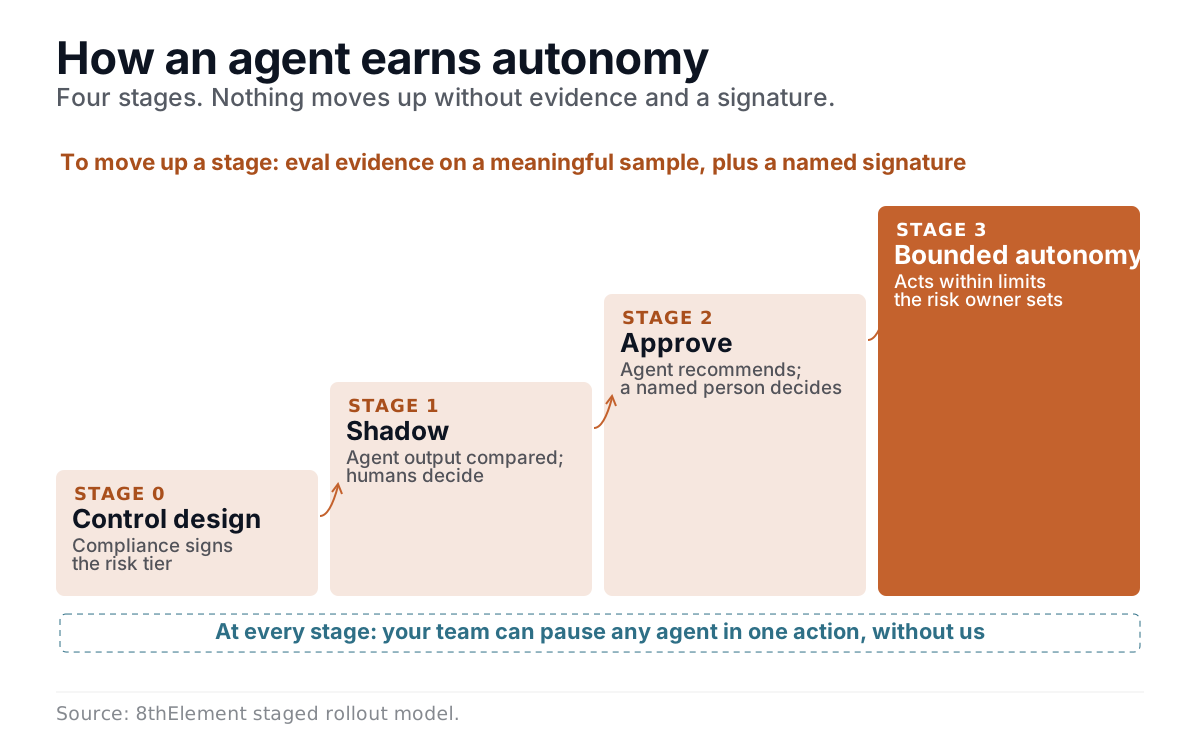
Evidence assembled and matched to policy before a nurse opens the case. Denials always reach a licensed clinician.
Read the use case →Medical policy & payment integrity
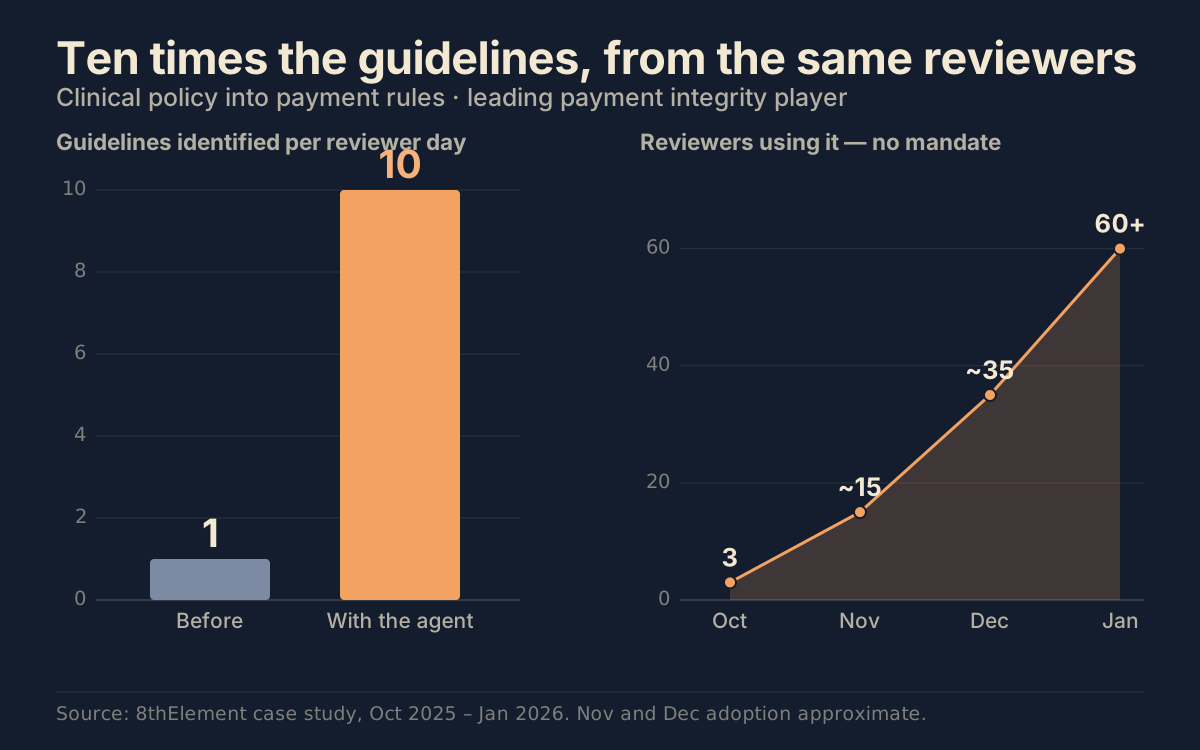
Policy read end to end, criteria surfaced with citations, guidelines drafted for clinical review.
Read the use case →Care gap closure
Members with open quality gaps found and ranked, outreach drafted, next step booked.
Claims anomaly & SIU
Suspicious patterns surfaced with an evidence pack investigators can act on the same day.
Clinical documentation
Draft notes with suggested codes and evidence. Clinicians edit and sign; coders audit samples.
Member service
Copilot beside the representative: benefits, claims status and network answers with sources.
Built inside your compliance boundary.
aligned to HIPAA with BAA capability. PHI stays in your environment. Adverse determinations are never automated and utilisation-review turnaround is tracked per state rule. Fairness monitoring across member groups on every agent that touches people.
What this looks like on a Tuesday.
Intake is still fax, portal and phone
A prior authorisation request arrives as a fax, through a provider portal, over the phone, or as an X12 278 transaction, with attachments that are scanned PDFs of uneven quality. The same clinical fact turns up in three formats and none of them agree on spelling. Before any decision can be made, someone has to turn that into one case file. That is the work we automate first: read every attachment, pull the facts the policy asks for, and cite the page each one came from.
Most cases meet criteria plainly. The rest need a clinician
A utilisation management nurse checks the request against the plan's medical policy and a criteria set such as InterQual or MCG. A large share of cases meet criteria on the face of the record. The agent assembles the evidence, marks which criteria are met and which are not, and shows the citation for each. Cases that clearly meet criteria can be auto approved where the plan allows it. Anything heading towards an adverse determination goes to a licensed clinician, every time, without exception.
The clock is now a regulatory deadline
Since 1 January 2026, impacted payers must decide standard requests within seven calendar days and expedited requests within 72 hours, and must give a specific reason for every denial. Annual prior authorisation metrics are reported to CMS. From 1 January 2027 the Patient Access, Provider Access, Payer to Payer and Prior Authorisation APIs must be live, which means bridging X12 278 workflows and FHIR rather than replacing one with the other.
The failures we see most.
The pilot met clean data
Models tuned on a curated sample meet scanned faxes, handwriting and missing pages in week one of production.
Training on past approvals
A model that learns from historical decisions inherits whatever was wrong with them, and cannot explain itself to an auditor.
Nobody owns the deadline
Turnaround is a regulatory obligation. If no named person owns the metric, the automation has nothing to move.
Six that go in first.
What we can deploy depends on your systems and data. An operator confirms the shortlist before an engagement starts.