Care and coverage, one evidence layer
A regional health system that also owns a health plan wanted shorter prior auth turnaround, more quality gaps closed and shorter member calls — without three separate AI programs and three separate audit trails.
Integrated health system · 2025–2026
A payer and a provider that shared a parent but not a platform.
UM nurses spent most of a case's cycle time locating and reading clinical evidence. Care coordinators worked from stale gap lists. Contact-centre representatives looked up benefits in one system and clinical status in another. Each team had been pitched its own AI tool.
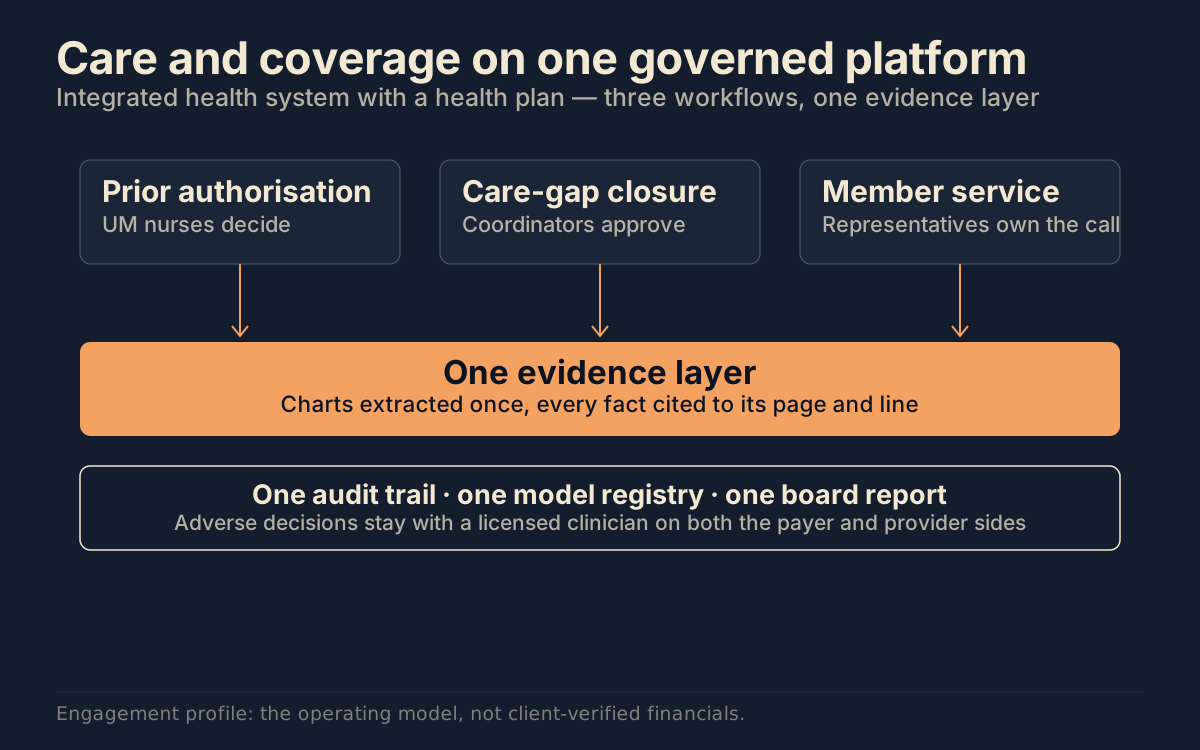
Three agents, one evidence layer, one governance OS.
The Prior Authorisation Agent assembles evidence and recommends; nurses and medical directors decide, and denials stay with a licensed clinician. The Care Gap Closer finds members with open gaps, drafts outreach and books the next step. The Member Service Copilot answers benefit and status questions with sources. All three share chart extraction and one audit trail.
What changed for the people doing the work.
Nurses open cases with evidence already assembled and cited. Coordinators work a ranked list with outreach drafted. Representatives get cited answers beside them and after-call work done. Argos meters cost per determination, per closed gap and per resolved call.
Four things worth carrying forward.
One evidence layer beats three tools
Chart extraction done once serves three workflows. The saving is consistency as much as cost.
Adverse decisions stay human, always
The design principle regulators asked about first.
Governance is easier when it's shared
One audit trail, one model registry and one board report across both sides.
Measure per outcome, not per token
Cost per determination is a number a health system CFO recognises.